 biocomma
Introduction
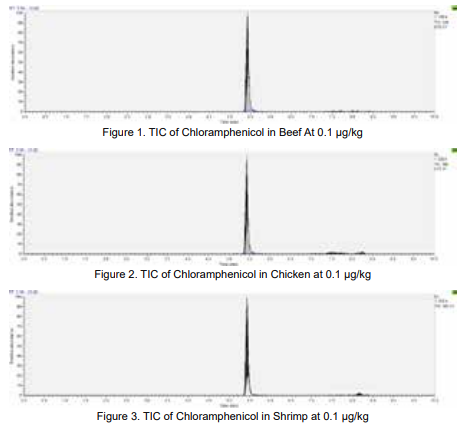
For the detection of chloramphenicol residues in Beef,chicken, fish and shrimp, Biocomma conducted experimentsand optimized parameters to establish a SPE-HPLC-MS/MSmethod with good recovery and stability for your reference.
Experiment
Extraction
Weigh 5 g (accurate to 0.02 g) of ground sample in a cleancentrifuge tube. Add 100 μL of internal standard, 10 mL ofacetonitrile and 10 mL of 4% NaCl solution. Vortex for 10min, then centrifuge for 10 min at 8000 r/min. Pipette thesupernatant to a clean centrifuge tube. Add 10 mL of n-hexane.Vortex for 1 min, then centrifuge for 2 min at 8000 r/min. Afterdiscard the supernatant, add 8 mL of water-saturated ethylacetate. Vortex for 2 min, then centrifuge for 2 min at 8000r/min. Concentrate the supernatant by nitrogen evaporatorand redissolve by 5 mL of 5% acetonitrile-water solution. Thesample is ready for purification.
Purification (Copure® C18 SPE Cartridges, 500 mg /3 mL)
Activation: activate the SPE cartridge by 5 mL of methanol,then 5 mL of water.
Loading: add the prepared solution to the SPE cartridge.
Washing: wash the cartridge by 6 ml of water twice.
Elution: add 8 ml of methanol and evaporate to dryness.Reconstitute with 1 ml of 50% aqueous methanol solution. Afterfilter by nylon membrane, the sample is ready for LC-MS/MSanalysis.
Preparation of Standard Curve Solution
Table 1. Standard Solution Preparation Method
Internal standard CAP-D5 solution: 50 ng/mL, chloramphenicolsolution 10 ng/mL and 50 ng/mL.

Instrumental Conditions
1.Chromatographic Conditions
Instrument: UPLC-MS/MS (Thermo Fisher TSQ Endura)
Chromatographic column: Hypersil GOLD C18 (2.1 mm×100mm, 1.9 μm)
Mobile phase: A: water, B: methanol
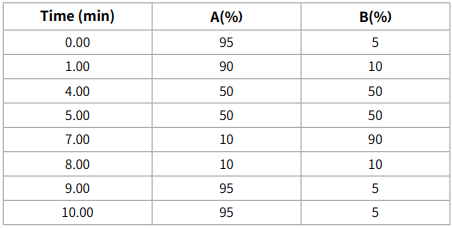
Elution mode: Table 2.
Flow rate: 0.3 mL/min
Column temperature: 30 ℃
Injection volume: 20 μL
Table 2. Gradient Elution Program
2.Mass Spectrometry Conditions
Ion source:HESI
Electrospray voltage: 3500 V
Sheath gas pressure: 40 arb
Auxiliary gas pressure: 10 arb
Ion exchange tube: 380 ℃
Auxiliary air temperature: 350 ℃
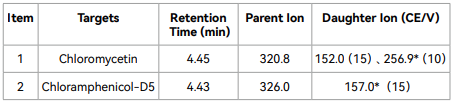
Table 3. Targets, Retention Times and Characteristic Ions (*QuantitativeIons)
Results
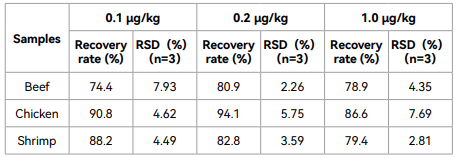
Table 4. Spiked Chloramphenicol Recovery
Ordering Information
