biocomma
Introduction
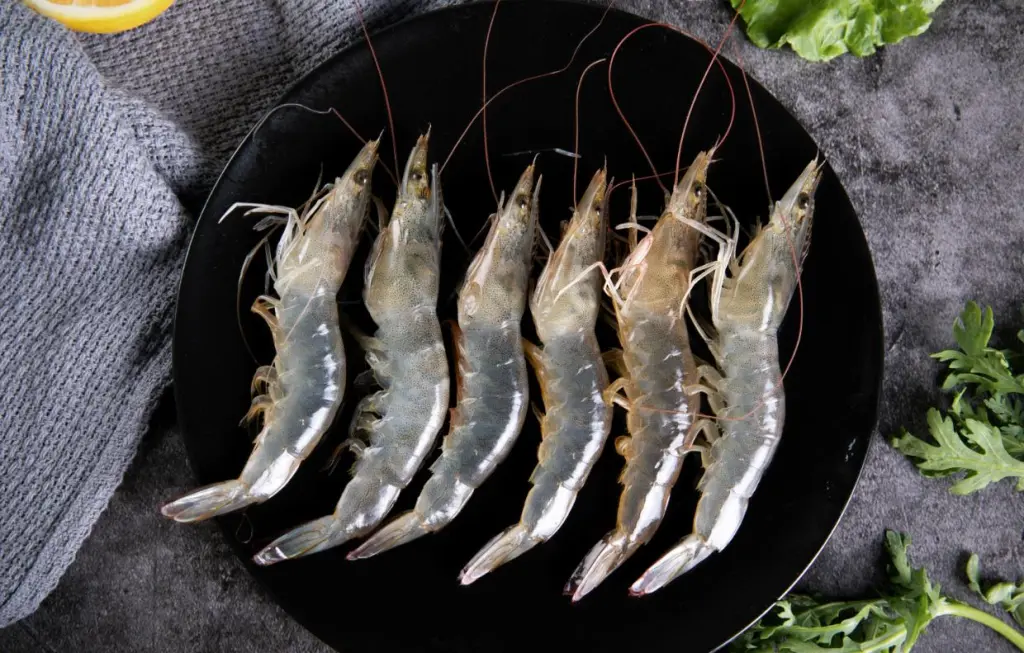
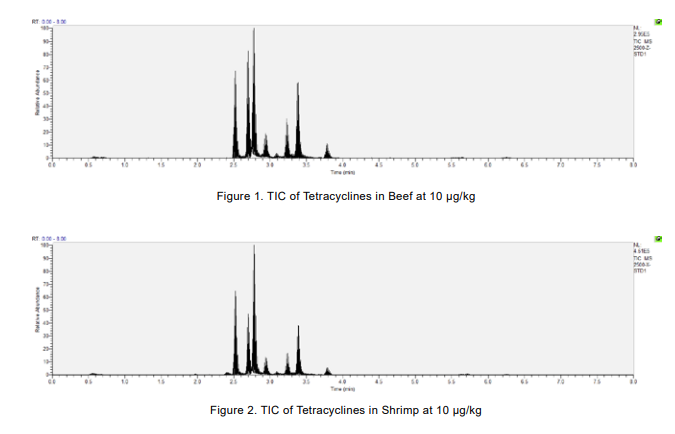
Tetracyclines are widely used antibiotics in animal husbandrydue to their cost-effectiveness and strong antibacterialactivity. Although HLB cartridges have been the conventionalmethod for purification sulfonamide, the need of QuEChERSapplication in veterinary drug residue analysis increasesrecently. Biocomma has developed a QuEChERS method todetect tetracycline residues in Beef and shrimp. The recoveryrate is greater than 65% with RSD less than 10 % for yourreference.
Experiment
Preparation
Na2EDTA-Mcllvaine buffer: weigh 12.9 g of citric acid, 10.9g of disodium hydrogen phosphate, and 39.2 g of disodiumethylenediaminetetraacetate, and dissolve by 900mL of water.Adjust the pH to 5.0±0.2 with 1 mol/L NaOH. Dilute to 1000 mLwith water.
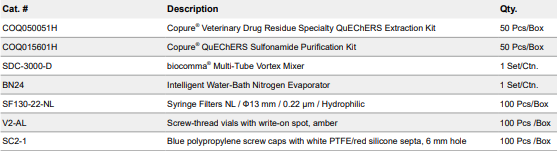
Extraction (Copure® QuEChERS, Cat. #: COQ050051H)
Weight 2.0 g of ground Beef into a 50 mL centrifuge tube. Add2 mL of Na2EDTA-Mcllvaine buffer (pH=4), then vortex for 1min. Add 10 mL of 1% acetonitrile acetate solution. Vortex for1 min, then add the QuEChERS extraction salt. Vortex to mixwell. Extract by ultrasonic treatment for 10 min, and centrifugeat 5000 r/min for 2 min. The sample is ready for purification.
Purification (Copure® QuEChERS, Cat. #: COQ015601H)
Add 6 mL of prepared supernatant and the QuEChERSpurification salt into a clean tube. Vortex at 2500 r/min for 2min, then centrifuge at 8000 r/min for 5 min. Evaporate 5 mLof supernatant to nearly dryness. Dilute to 1 mL by methanolsolution with 0.1% formic acid (water: methanol = 9:1). Thesample is ready for analysis.
Preparation of Standard Curve Solution
Prepare blank sample in the same procedures. Add internalstandard to prepare the concentrations of 2 μg/L, 10 μg/L, 50μg/L, 100 μg/L, 200 μg/L and 500 μg/L.
Instrumental Conditions
1.Chromatographic Conditions
Instrument: UPLC-MS/MS (Thermo Fisher TSQ Endura)
Chromatographic column: Yilit SinoPak BEH T-C18 (2.1mm×100 mm, 3 μm)
Mobile phase A: water containing 0.1 % formic acid
Mobile phase B: methanol-acetonitrile solution containing 0.1%formic acid (methanol: acetonitrile=2:8)
Flow rate: 0.3 mL/min
Column temperature: 35 ℃
Injection volume: 10 μL
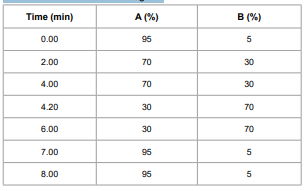
Table 1. Gradient Elution Program
2.Mass Spectrometry Conditions
Ion source: HESI
Electrospray voltage: 3500 V
Sheath gas pressure: 40 arb
Auxiliary gas pressure: 2 arb
Ion exchange tube: 380 ℃
Auxiliary air temperature: 350 ℃
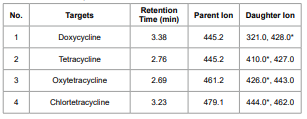
Table 2. Targets, Retention Times and Characteristic Ions (*isQuantitative Ions)
Results
Table 3. Spiked Recovery of Residue in Beef & Shrimp
Ordering Information